Would you buy a home today with mortgage rates around 7.4%? Or would you wait for lower rates, knowing that could mean higher prices and more competition?
It’s a fair question, and the market right now doesn’t make it easy. Let’s look at what’s actually happening in the Estes Valley before deciding which side of it you land on.
The Estes Valley, Third Quarter 2026
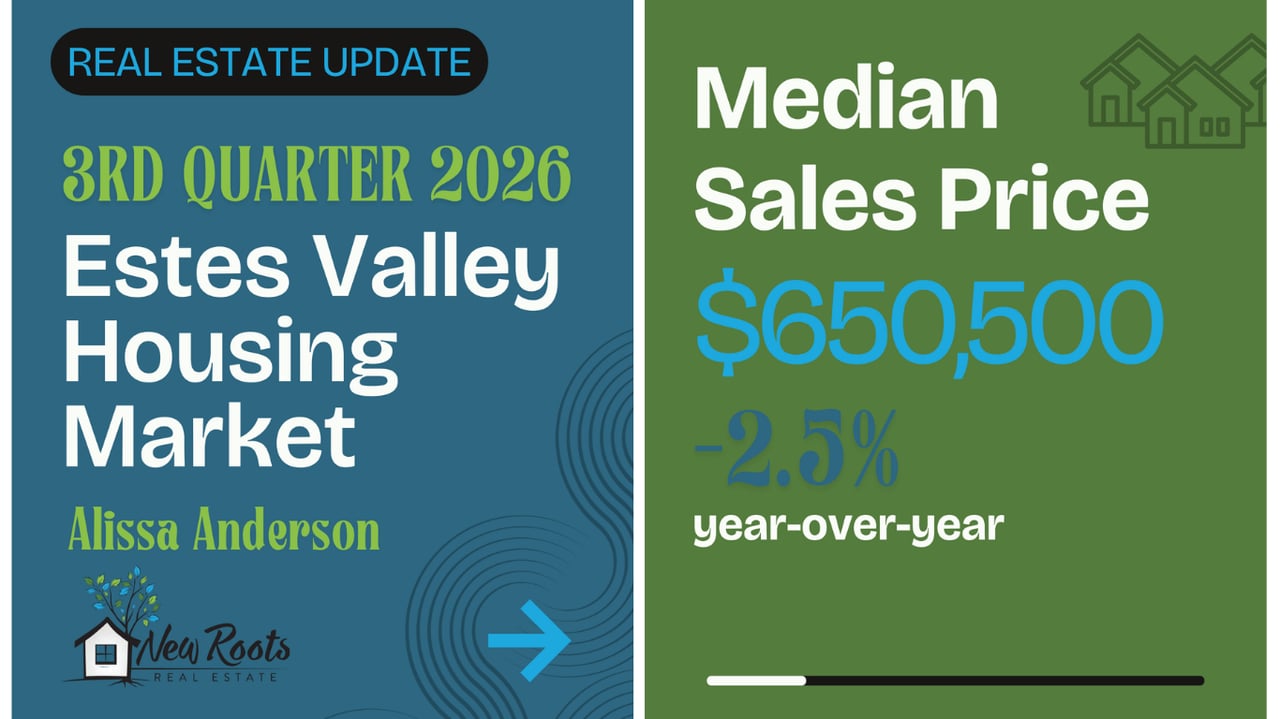
- Median sales price: $650,500 | down 2.5% from last year
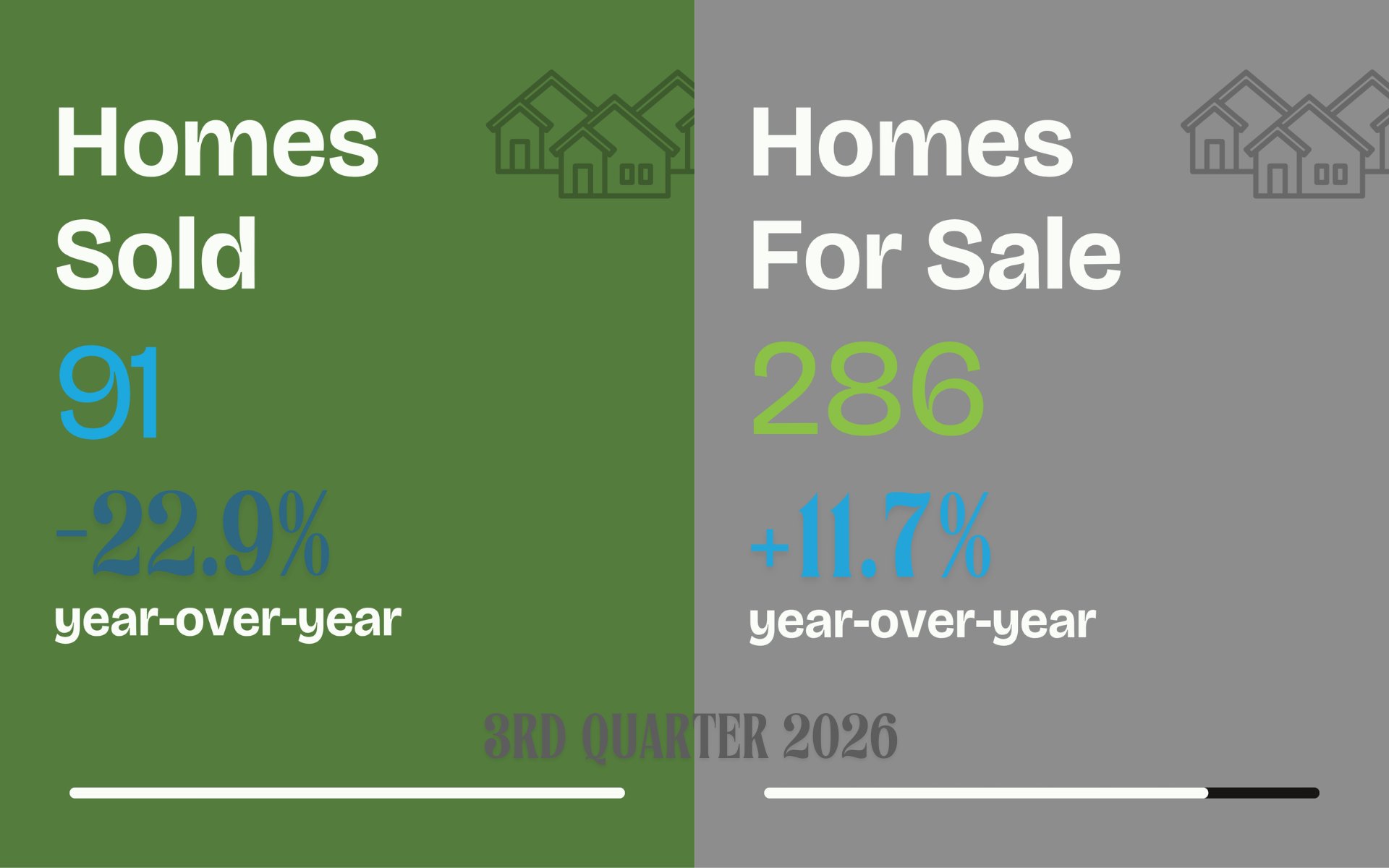
- Homes sold: 91 | down 22.9% year-over-year
- Homes for sale: 286 | up 11.7% year-over-year
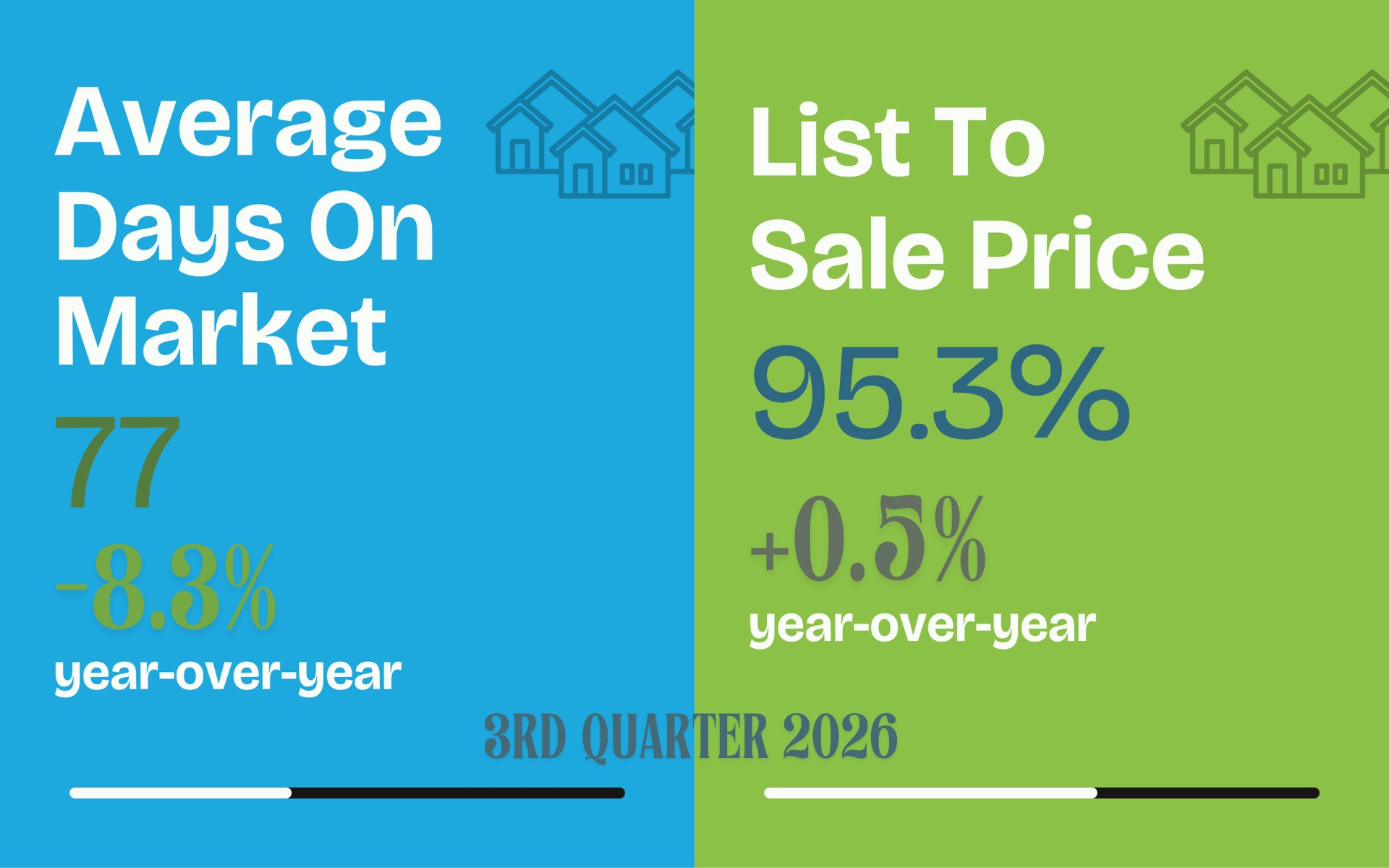
- Average days on market: 77 | down 8.3% year-over-year
List-to-sale price ratio: 95.3% | up 0.5% year-over-year
What the numbers are telling us
Buyers have more to choose from. Inventory is up nearly 12%, while closed sales dropped by almost a quarter. Fewer buyers are making it to the closing table, which is consistent with what higher rates tend to do.
Prices have softened slightly, but not dramatically. The median sale price is down 2.5%, roughly $17,000 below last year. With only 91 sales in the quarter, the median can shift depending on which homes happen to sell, so I’d read it as “holding steady with a small dip” rather than a trend.
Negotiation room is real. On average, homes sold for 95.3% of list price, which works out to about $30,000 off a $650,000 listing. That’s up slightly from last year, so sellers are holding firmer than they were, but there’s still room to work with.
Well-priced homes are still moving. Average days on market came down to 77, about a week faster than last year. Buyers are being selective, and sellers who price realistically are being rewarded.
Camp 1: Buy now, negotiate, refinance later
This buyer takes advantage of today’s inventory and leverage. They negotiate on price, ask about concessions, and plan to refinance if rates come down. The appeal is simple: you can change your rate later, but you can’t renegotiate the price you paid.
Camp 2: Wait for lower rates
This buyer would rather hold off until borrowing costs ease. Here’s the trade-off: when rates fall, buyers on the sidelines tend to come back all at once. More competition can mean less negotiating room, and possibly higher prices, right when your payment gets cheaper.
What the rate difference looks like
On a $650,500 home with 20% down, the principal and interest payment at 7.4% is roughly $3,600 a month. If rates dropped to 6.5%, it would be closer to $3,290, a difference of about $310 a month. That’s meaningful, but it’s also a number you can plan around. Taxes, insurance, and your own down payment will change the math, so treat this as an illustration, not a quote.
Another option buyers are looking at
Some buyers are skipping the wait-or-buy debate and looking at adjustable-rate mortgages instead. Nationally, ARMs made up 10.5% of mortgage applications recently, as their rates remain nearly a full percentage point below 30-year fixed-rate loans.
The appeal is a lower payment up front. The trade-off is that the rate can change after the initial fixed period, so an ARM works best when you have a clear plan for what happens next, whether that’s selling, refinancing, or being comfortable with a higher payment down the road. It’s worth running the numbers with a lender before you decide.
The honest caveat
Refinancing isn’t guaranteed. Nobody knows where rates will be in a year, and the right call depends on your finances, your timeline, and how comfortable you are with the market as it stands. There’s no one-size-fits-all answer, but understanding the trade-offs is what lets you make a decision you feel good about.
Frequently Asked Questions
Can I really refinance later?
Possibly, but it’s not a promise. Refinancing depends on where rates are when you want to do it, your credit, your income, and your home’s value at that point. It also comes with closing costs, so the savings need to outweigh those costs over the time you plan to stay. If the payment only works for you when rates drop, that’s worth talking through before you buy.
Is an adjustable-rate mortgage a good way to get a lower payment?
It can be, for the right buyer. An ARM typically starts with a lower rate than a 30-year fixed, which eases the monthly payment early on. But the rate can adjust after the initial period, so it makes the most sense if you expect to move or refinance before then, or if your budget can absorb a higher payment later. A lender can show you how the loan would work under different scenarios.
If rates fall, will prices go up?
Not necessarily, but demand usually returns when borrowing gets cheaper, and more buyers competing for the same homes can push prices up and shrink negotiating room. Right now the Estes Valley has 286 homes for sale, up 11.7% from last year, so there’s more supply to absorb. Nobody can say how those two forces will balance out.
How much room do I really have to negotiate?
In Q3, homes in the Estes Valley sold for an average of 95.3% of list price. On a $650,000 home, that’s about $30,000 below asking. Every property is different, though. A well-priced home in great condition may sell at or near list, while one that’s been sitting may leave more room.
Is the median sales price a reliable number?
It’s a useful snapshot, but it can swing. With 91 closed sales in the quarter, the mix of homes that sold can move the median on its own. I’d look at it alongside days on market, inventory, and list-to-sale ratio rather than by itself.
What can I negotiate besides the price?
Quite a bit. Depending on the property and the seller, that can include closing cost credits, a rate buydown, repairs after inspection, or flexibility on closing dates. When rates are high, a concession that lowers your monthly payment can be worth as much as a price reduction.
How long should I plan to stay if I buy now?
Longer is generally safer, especially if you’re counting on a refinance. A longer timeline gives you more room to wait out the rate environment and recover the costs of buying. If you think you might move in a few years, we should run the numbers carefully first.
Your turn
If you were buying in the Estes Valley or Northern Colorado today, which camp would you be in, and why? I’d love to hear your perspective on the current market. And if you’re weighing this decision yourself, I’m always happy to sit down and walk through the numbers with you.
Data source: IRES MLS, Q3 2026, Estes Valley (Estes Park School District boundary)